Topics of Experience: Investigation of speech, language, and hearing processes using electrophysiology, neuroimaging, and signal analysis; newborn hearing, infant language, and neonatal CMV screenings; hearing screening and intervention for persons with intellectual disability; developmental language and fluency disorders; voice disorders; hearing aids and implants.
Committee Members
Prof. Dr. Igor Kastyro, PhD, DSc European Institute for Clinical Physiology and Pathology, Herceg Novi, Montenegro iscpp.eu
Topics: Voice of the hearing impaired, septoplasty, surgical stress, neuroprotection, inflammation, transplantation.
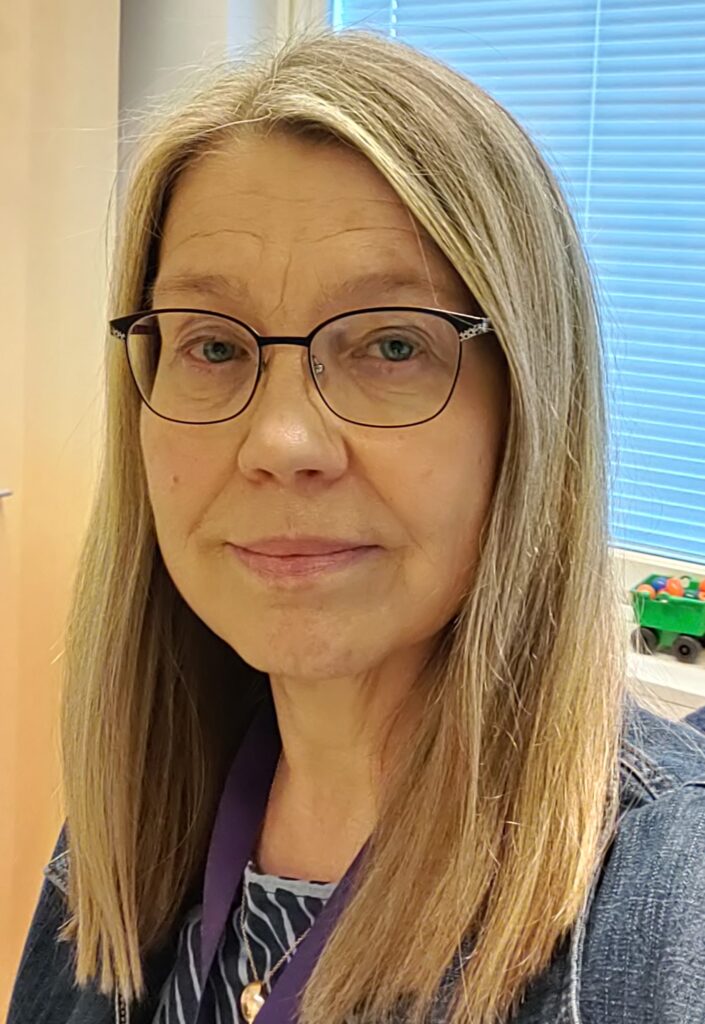
Mari Qvarnström, MD, PhD Head of Department, Kuopio University Hospital, Kuopio, Finland ORCID
Topics: Speech and language disorders, speech motorics, learning difficulties.
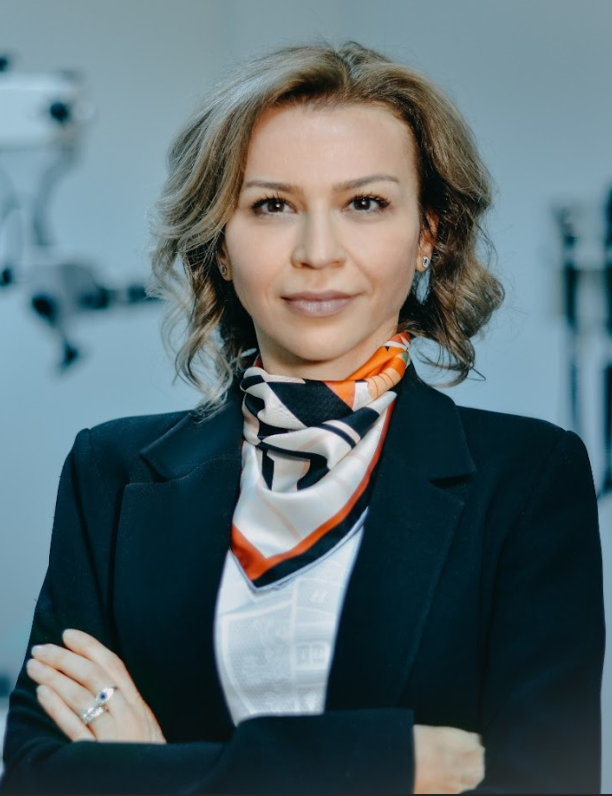
Assoc. Prof. Dr. H. Bengü Çobanoğlu, MD, MSc Karadeniz Technical University Medical Faculty, Department of Otorhinolaryngology, Trabzon, Turkey bengucobanoglu.com
Topics: Speech after head and neck cancer treatments; vocal fold benign lesions; hearing restoration in tympanoplasties and implant surgeries; tinnitus management.
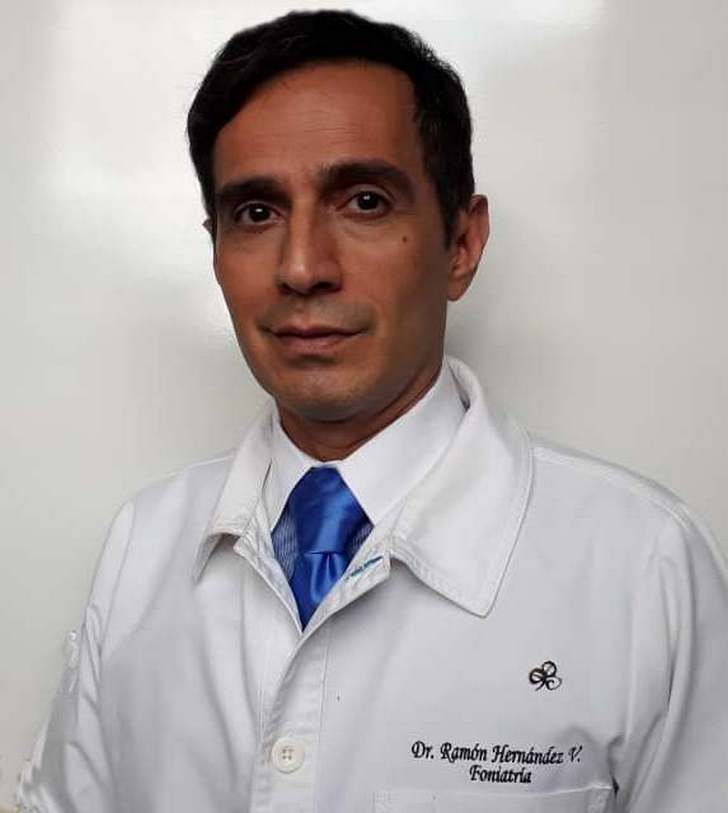
Assoc. Prof. Dr. Ramón Hernández-Villoria, MD, MSc Centro Clínico de Audición y Lenguaje Cealca, Caracas, Venezuela ORCID
Topics: Hearing across the lifespan, hearing aids fitting, audiology, clinical phonetics, acoustic voice analysis, prenatal hearing screening.
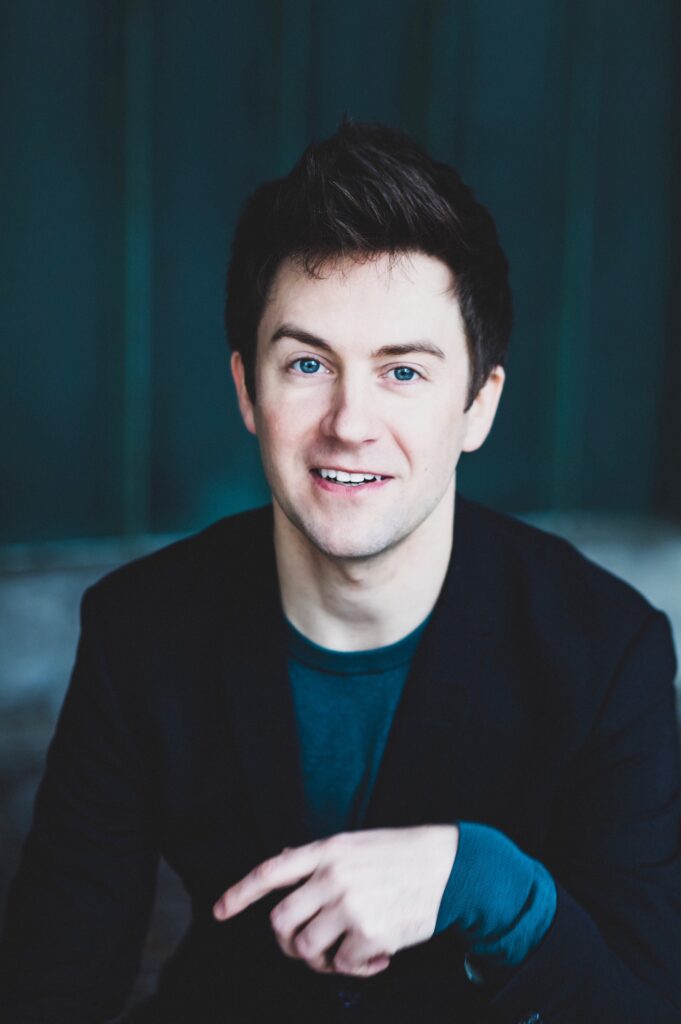
Philipp Mathmann, MD Department of Phoniatrics and Pedaudiology, University Hospital Münster, Germany philippmathmann.com
Topics: Hearing in people with intellectual disability, voice, children's speech development, developmental language disorders.
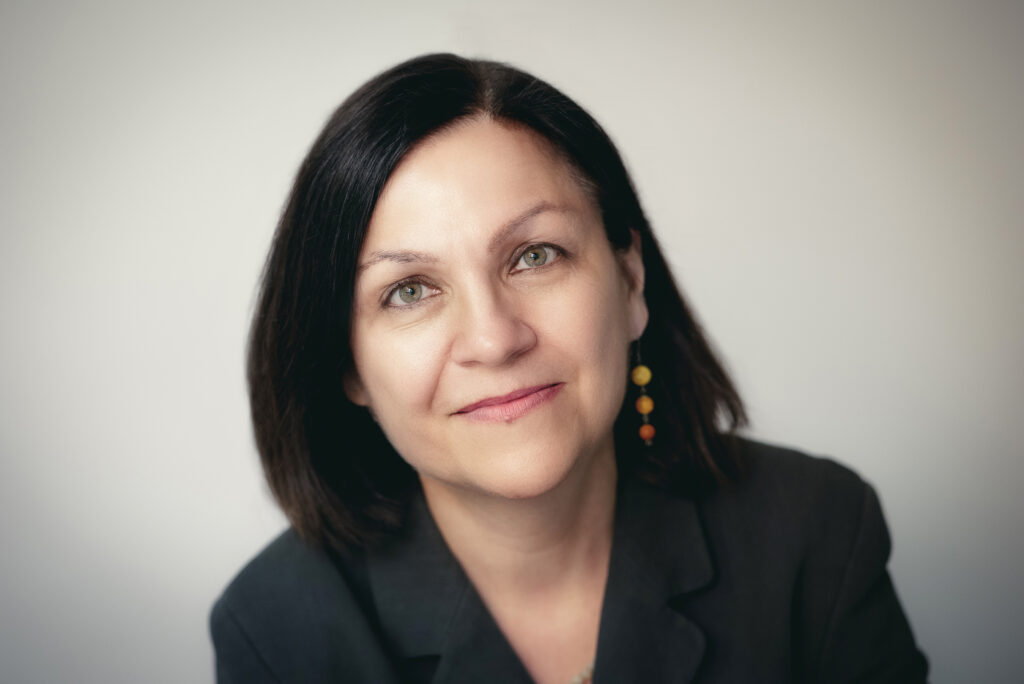
Topics: Professional voice care, acoustic voice analysis, vocal fold benign lesions, audiology, tinnitus management, vocal fatigue research.
Committee Activities and Projects
World Hearing Day 2025 — 3rd March
A High Prevalence of Undetected Hearing Loss in People with Intellectual Disabilities Requires Hearing Screening, Diagnosis, and Intervention Programs
This webinar aims to change mindsets about hearing care for people with intellectual disabilities. A German population-based study investigated the effectiveness of an outreach program with repeated hearing screenings, diagnoses and interventions in 1,052 people with intellectual disabilities in their living environment. Hearing loss was diagnosed in 42% of cases, 68% of which were previously unknown.
Program
Prof. Katrin Neumann, MD — Hearing screening, diagnostic, and intervention programs for people with intellectual disabilities
Philipp Mathmann, MD — Outcome of a population-based study on hearing programs for people with intellectual disabilities
Lucas Prein, MSc — Hearing screening and diagnostic methods
Nils Vogt, B.Pro — Treatment with hearing aids
Prof. Karolin Schäfer, PhD — Hearing rehabilitation
Susanna Zielonkowski, cand. med. — Hearing-related quality of life
Anna Wiegand, MD — Hearing assessment in a clinical setting
Anna-Sophia Schwalen, MD — Hearing intervention in a clinical setting
Prof. Katrin Neumann, MD — Needs and call for action
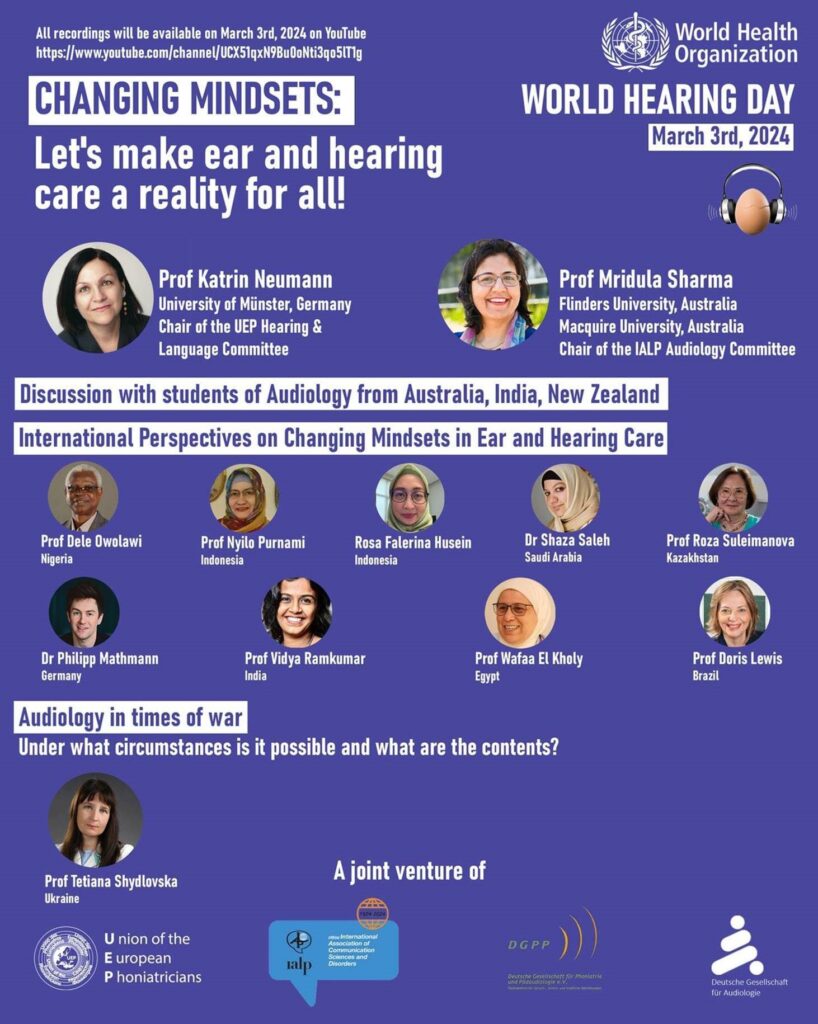
World Hearing Day 2024 — 3rd March
Discussion: Changing Mindsets — Let's make ear and hearing care a reality for all!
A virtual event giving students from Australia, New Zealand and India, and professionals from countries where hearing and audiology care is still developing, an opportunity to share perspectives alongside members of the Audiology Committee of the IALP and the Hearing & Language Committee of the UEP.